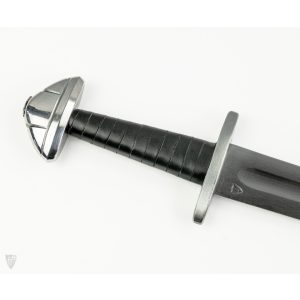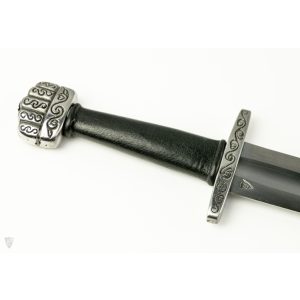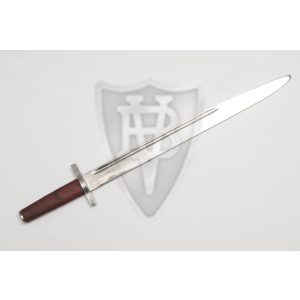
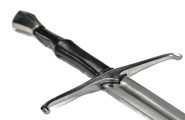
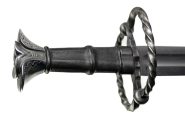
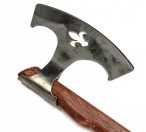
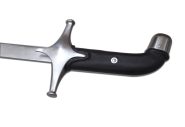
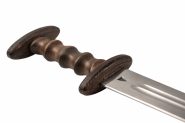
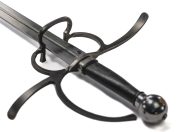
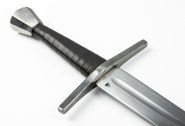
Simple sword for reenactment, with straight blade and without crossguard.
Material: 51CrV4 springsteel, hardened to 52 HRC
Simple sword for reenactment, with straight blade and without crossguard.
Material: 51CrV4 springsteel, hardened to 52 HRC
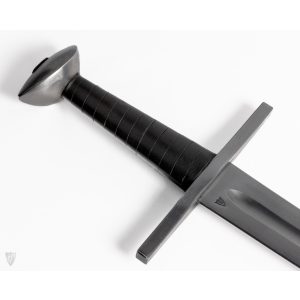
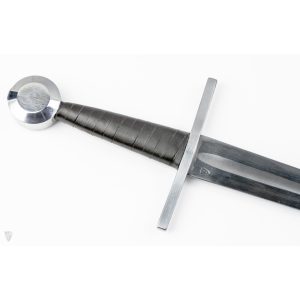
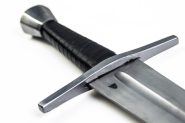
Onehand sword with brasil nut pommel, made for reenactment.
The original sword was made in Germany, around 1280.
Sharpening a sword blade before or after assembling the sword.
During sharpening, the blade loses its original thickness, making it more flexible and lighter, but also more fragile, of course.
The use of sharp swords is a training exercise that requires practice and knowledge, which must be exercised with extreme caution!
Damage and deflection of the swords are primarily due to cutting errors, so these damages are not warranty problems!
One-edge Wiking sword, made for reenactment or HMB.
Wide fuller, wheeler type II.
Viking sword found in Kilmainham, Dublin.
Díszes viking kard, vésett virágmintás szerelékekkel.
Haditorna kivitelben készül, fényesre polírozott, edzett 51CrV4 acél pengével.
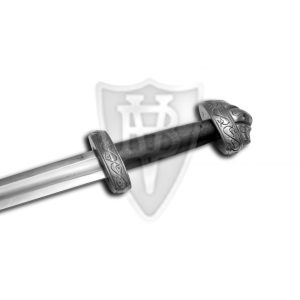
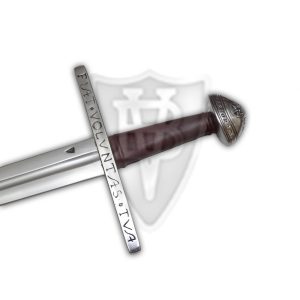
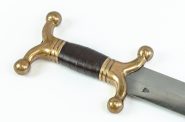
Featured with decorated pommel and the cross with engraved inscript.
Viking sword for reenactment, or BUHURT, with a shiny polished blade.
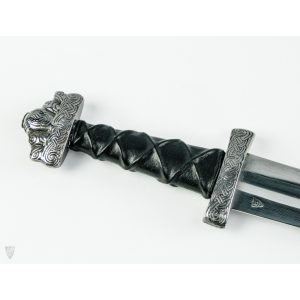
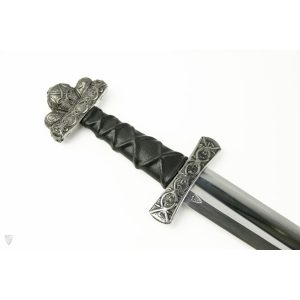
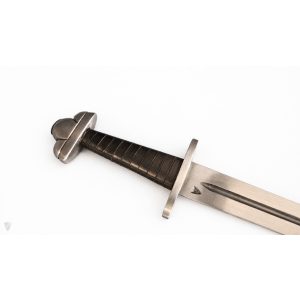
The tri-lobed pommel is riveted from two parts. The original sword was found on Polish territory.
900-950 AD. Mostly richly decorated. Some have inscription on the blade, mostly an “Ulfberht” inscription”, supposed to be made by master blacksmiths in French areas. Found all over Scandinavia.
The design of the pommel is very specific. This type of sword can be found in several European museums indicating how popular it was throughout Europe. ex.Nationalmuseet, Copenhagen.
In Hungary it can be discovered within the Szob-Vendelin Collection.
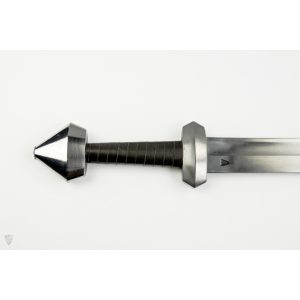
Massive Wiking sword, made for reenactment and HMB battles.
Wide fuller, wheeler type II.
Viking sword found in a barrow in Sæbø, Hoprekstad, Norway in 1825.